
Name-Based Case Searches
Moore County offers no online trial search with a name field. A name search here means asking the clerk directly. Bring a case number if you have one. Without it, give the clerk the exact filed name or caption, your party role, the likely court, and a narrow year range. Business disputes need the full legal entity name. The clerk decides which identifier the local system accepts.
- Identify Circuit, Chancery, General Sessions, Metropolitan General Sessions, or juvenile court from the subject and existing papers.
- Call the Circuit Clerk at 931-759-7208 when the court is Circuit or uncertain. Call the Clerk & Master at 931-759-7028 for Chancery matters.
- State the exact name or caption, party role, approximate filing year, and case type without asking the clerk to compile new facts.
- Ask whether inspection, a printed docket, a public terminal, or a verified vendor link is available. No public terminal or Moore vendor access was confirmed.
- Request the docket entries separately from any order, judgment, pleading, recording, or certified copy.
You can inspect records in person at the relevant counter, 196 Main Street in Lynchburg. Call ahead about mail or email procedures. No online form, fax line, or drop box exists for Moore court requests.
No Moore Trial Search Portal
Moore County posts no public trial docket URL. The Metro Moore court pages lead to the same dead end. So do the AOC directories, clerk listings, state court resources, and county navigation. No login, filter, or export tool appears. That gap is real, yet it says nothing about the clerk's internal case system. The counter can still pull a docket on request. For how a request should be framed and answered, the official Tennessee Public Records Act guidance explains request timing and specificity.
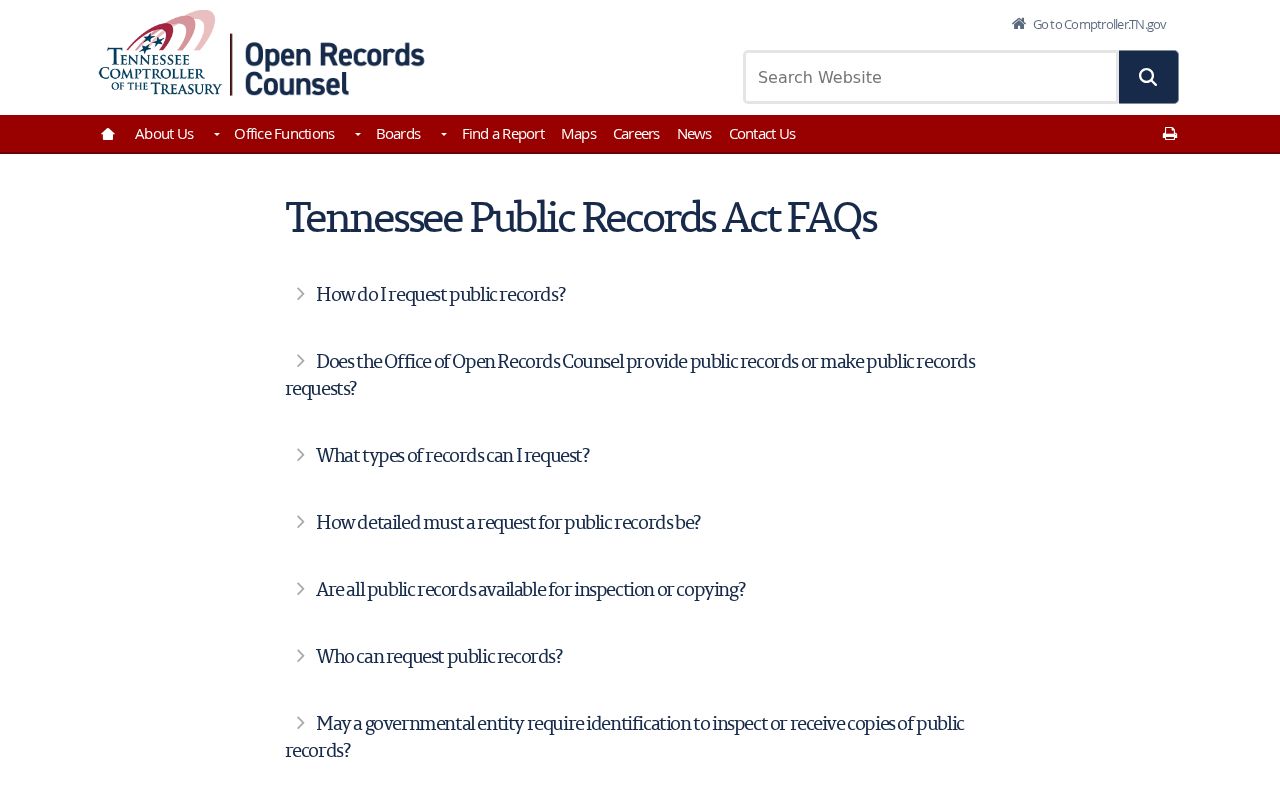
Request the exact docket sheet, order, or judgment. A request that asks an office to compile everything about a case usually slows the answer down.
Case Number Searches
Copy a Moore County case number exactly. Pull it from a notice, pleading, order, receipt, or an old docket printout. Keep every punctuation mark and suffix. Moore County publishes no local number pattern or code legend. An invented sample would only mislead you. Ask the clerk to read the number back. Confirm the court division too.
The Tennessee Public Case History site does publish one sample format: E2008-02744-COA-R3-CV. That is a state appellate number, not a Moore County trial number. Its segments encode an appellate sequence and court. If a Moore case is appealed, keep both the trial number and the appellate number. The appellate record often lists the originating court, the trial judge, and the trial number. Those details help the Moore clerk pull the underlying file.
Four Tennessee Appellate Search Modes
The Tennessee Public Case History search covers the Supreme Court, Court of Appeals, and Court of Criminal Appeals with one search term and four modes. There is no county dropdown or Moore trial selector. No hearing-date calendar or case-type filter appears either.
| Field Label | Type | Required | Options or Format |
|---|---|---|---|
| Search term | Text | Yes or unspecified | Format depends on the selected mode |
| Case Number | Radio choice | One mode | Uses a state appellate number |
| Case Style | Radio choice | One mode | Uses a distinctive appellate caption |
| Party Name | Radio choice | One mode | Searches an appellate party |
| Business/Organization | Radio choice | One mode | Searches an organization name |
| Advanced Search | Link or control | No | Opens added appellate controls when available |
Look for a Search button and an Advanced Search link. The basic form carries no export control and no statement limiting results.
Case Search Results Explained
A docket search result is an index of events, not free access to every document. Some images cost money; some stay closed. Moore County's trial screen has its own field layout. So treat the statewide appellate labels as vocabulary, not a picture of what Moore actually shows.
| Case Overview | Appellate style, number, originating trial court, trial judge, and trial-court number when supplied. |
|---|---|
| Milestones | Dated events such as appeal filed, record filed, briefing, argument, decision, disposition, and closing. |
| Parties | Names and appellate role labels, subject to lawful restrictions. |
| Document History | Event date, event type, filer when shown, and a PDF link when available. |
| Record Information | A separate appellate block whose fields can vary for migrated cases. |
Ask the Moore clerk for the docket or case-history printout first. Request the pleading, order, judgment, or certified copy separately. A docket may say “order filed” while the order itself sits in the file.
Moore Appeals and Portal Limits
Public Case History reaches appeals with records filed after September 1, 2006. Its data runs through the end of the prior business day. Older files depend on migration. Many motions, orders, judgments, and opinions filed after August 26, 2013 carry PDFs. Those are scope limits on the state system, not Moore County trial coverage.
Access starts from a presumption of openness. Every court record still answers to the scope, migration, and restriction rules of the system that holds it.
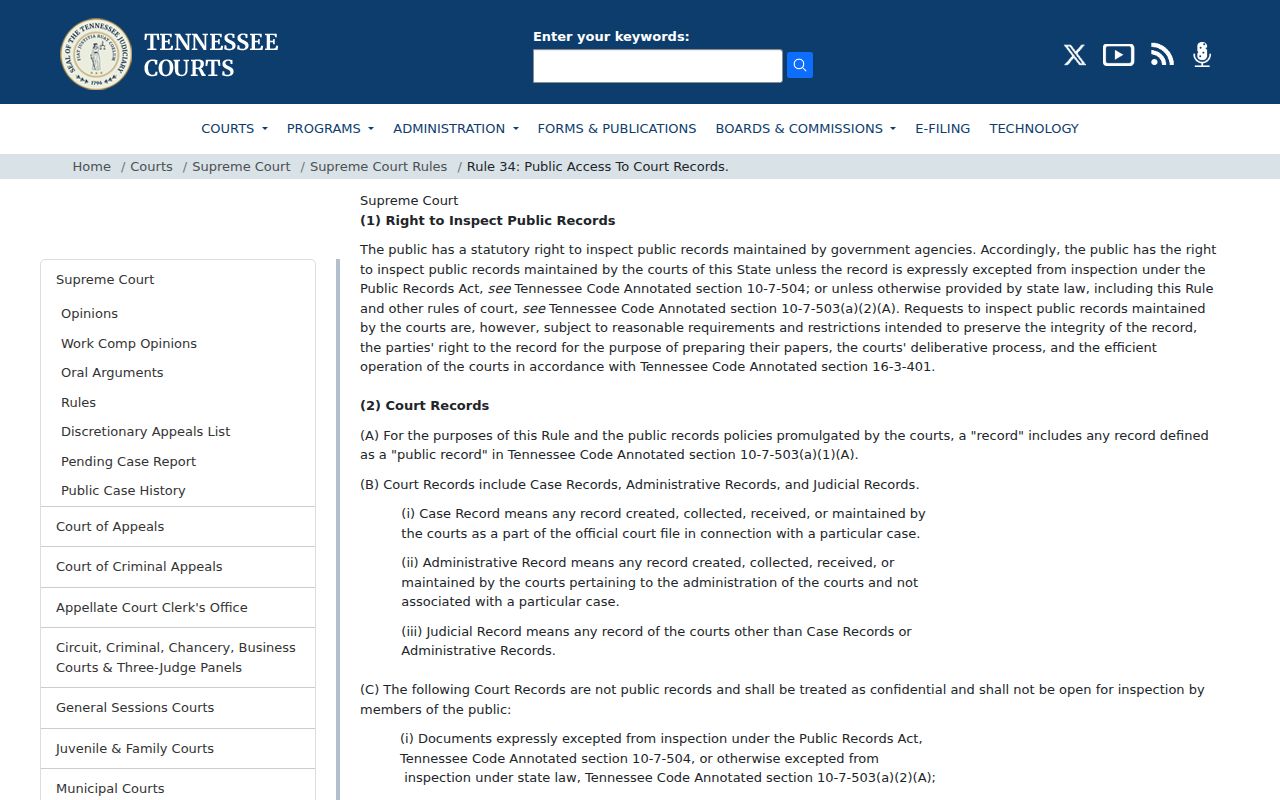
Public access begins with a presumption. Yet a court record still follows the scope, migration, and restriction rules of the system holding it.
Two Ways to Search: County and State
Local and statewide routes answer different questions. Take an ordinary Moore County trial case to the clerk. Public Case History only helps once a case reaches a Tennessee appellate court.
| Search Point | Moore County Clerk Route | Tennessee Public Case History |
|---|---|---|
| Coverage | Circuit, Chancery, General Sessions, or other local division after correct routing | Supreme Court, Court of Appeals, and Court of Criminal Appeals |
| How to search | Case number, caption, party role, court, and approximate year supplied to clerk | Appellate number, style, party, or business/organization |
| Access | Phone, counter, possible terminal, inspection, copy request, or confirmed vendor route | Public web form with date and migration limits |
| Best use | Local docket events, setting confirmation, and trial-file requests | Appellate milestones and available appellate PDFs |
Once you locate the file, follow the Moore County court schedule workflow to find the hearing date. Confirm the latest setting with the clerk.
E-Filing Is Not Public Search
Electronic filing in Tennessee works through Rule 5B of the Tennessee Rules of Civil Procedure. That rule lets local courts opt in for registered filers. The AOC annual report shows Moore Circuit and Moore Chancery on the "have Applied" list. That says nothing about a free public docket login. A court can open e-filing to approved filers. It can still offer the public no case lookup at all.
Treat TennesseeCaseFinder with the same caution. The public page mentions Circuit and General Sessions civil cases in participating counties. Moore participation was not confirmed. No Moore public endpoint appeared. No open fields, county filter, result limits, or public document price either. Ask the Moore clerk two things: does the county participate, and is there a public terminal or account? Skip any guessed county link.
Which Cases Stay Restricted
Tennessee Supreme Court Rule 34 presumes that court records are open. Yet it carves out sealed, confidential, protected, draft, and internal material. Juvenile cases, adoptions, some domestic matters, mental-health files, medical details, victim data, identifying information, and expunged or sealed content may all face limits. Those limits come from a rule, a statute, or a court order. A Moore County docket search that comes back empty may simply mean no local portal exists. It may also mean the appellate portal does not reach that far.
When a case you expect is missing from the docket, ask a few pointed questions. Is the whole case restricted? Or is only the document image withheld while public docket metadata stays open? Could a redacted version be inspected on request? A public-records request will not break a seal or bypass a special access rule. If the clerk denies access, ask what rule or order controls. Also ask whether a court order or proof of identity would change the answer.
For an official copy, the Tennessee certified public-record rule governs how certification works. The official page explains it.
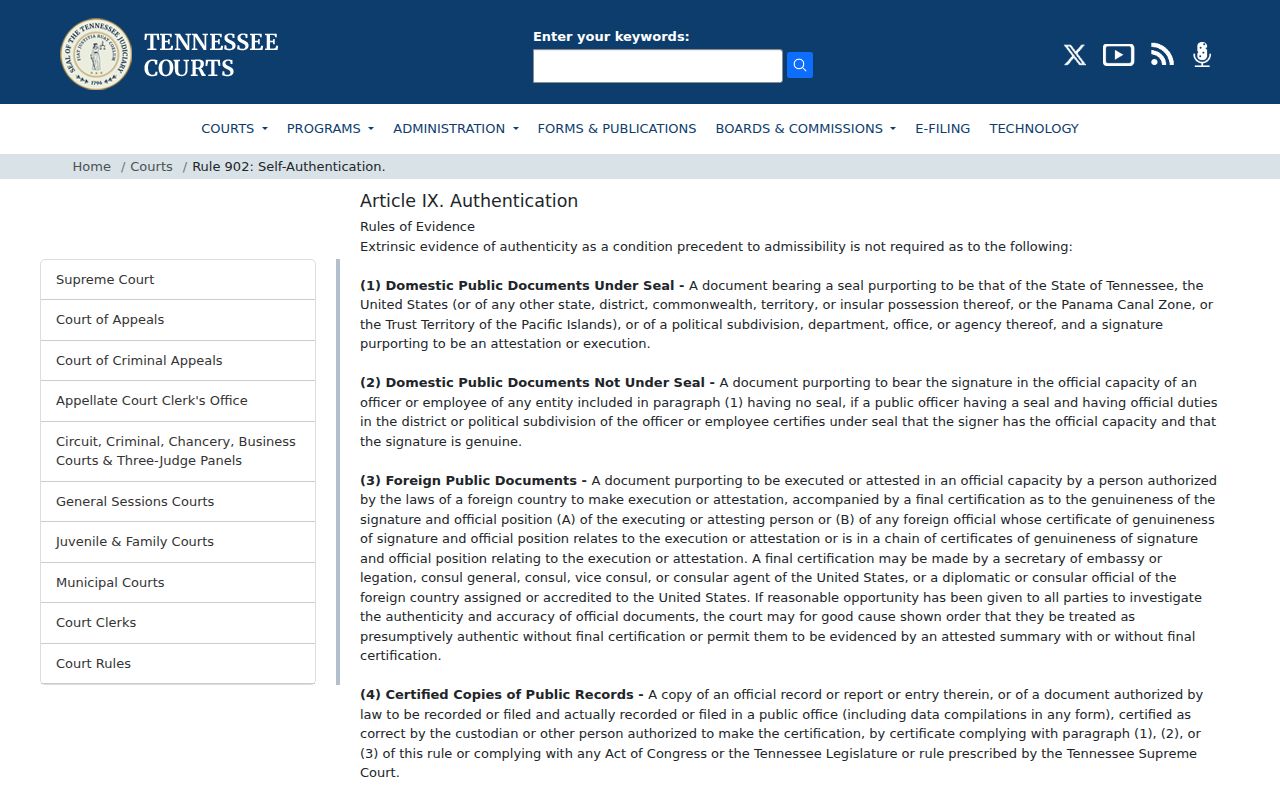
Certification is a separate service the clerk provides when you need an official copy. It does not open doors the law keeps shut; a restricted record stays restricted even with a certified stamp.
Historic Moore Dockets Need Archives
For cases from an earlier era, the courthouse docket systems will not carry you far. The Moore County Archives keeps Chancery minutes, dockets, wills, probate deeds, and loose records from 1872 through 1958. It also holds Circuit Court minutes, dockets, and miscellaneous records covering 1872 through 1944. County Court materials run from 1872 through 1949. Some files never left the active courthouse. Treat those date ranges as finding aids, not proof that a complete court record sits in one place.
You can reach the Archives at 241 Main Street, Suite 105, Lynchburg. The phone number is 931-759-7068. Email works too, at moorecountyarchives@yahoo.com. The published directory lists hours of 8:00 a.m. to 3:00 p.m. on Tuesday and Friday. Wednesday and Thursday are closed. Call ahead before you drive over. Name the court, the record series, the parties or caption, and the year you need. The same contact serves as the published Moore Public Records Request Coordinator route. That role does not make the Archives custodian of every active case.
Note: When a full file cannot be copied, ask the archive for a finding aid. The same goes when the original still sits at the courthouse.