
How the Moore County Court Calendar Works
Moore County posts no official daily trial calendar on the public web. It spans no single site across every local court. Instead, the calendar follows the division handling your case. The Circuit Court Clerk handles Circuit matters, felony trial work, and appeals from General Sessions. Chancery settings run through the Clerk & Master. General Sessions takes limited civil and criminal cases, preliminary felony hearings, traffic, and juvenile matters. City ordinance cases go to the Metropolitan Court of General Sessions. That court absorbed the former Lynchburg Municipal Court.
The Tennessee AOC courthouse directory lists 196 Main Street in Lynchburg. The address covers Circuit, Criminal, and Chancery functions. An address alone will not give you a live courtroom list. It will not confirm a case date either. The court offers no public floor map, daily docket, judge calendar, or settings search. So work from the court and case number on your latest notice. Then ask the proper clerk for the current date, time, location, judge, and setting type.
Moore Chancery Regular Sessions
Moore County Chancery Court runs on the most specific calendar rule in the area. Under the 17th Judicial District local rules, regular Moore Chancery sessions land on the third Monday in March and September. Those dates can shift for holidays or judicial conferences. The Clerk & Master posts the current dates. Docket call happens as each regular session opens.
Not every Chancery case lands on those Mondays, though. The Chancellor's calendar governs contested matters, which get set through the Chancellor or a secretary. Uncontested matters go through the Clerk & Master instead. Family cases under six months old, and non-family cases under one year old, may let counsel skip docket call under the stated rule. Still, check your notice and confirm the setting with the clerk before you rely on it.
Moore County Court Date Lookups
Finding a Moore County court date is mostly a clerk-routing job, because the county posts no public local calendar. Start with the full case number. If you lack it, bring the filed caption, the court division, your party role, and the approximate filing year. Then work every channel the sources support:
- Check the latest notice, citation, or order and identify Circuit, Chancery, General Sessions, Metropolitan General Sessions, or juvenile court.
- Call the Circuit Court Clerk at 931-759-7208 for Circuit matters or uncertain criminal routing. Call the Clerk & Master at 931-759-7028 for Chancery.
- For Sessions, traffic, or juvenile routing, call 931-455-5407 and ask for the current clerk records line.
- Ask whether a public terminal or current courthouse posting is available at 196 Main Street. Neither channel was confirmed.
- Request the dated setting list, notice, or docket entry from the custodian. Confirm mail or email acceptance before sending anything.
- If the case is on appeal, use Tennessee Public Case History for appellate events only. It is not the trial calendar.
Ask about remote appearances as a separate question. Moore County offers no official Zoom link, remote-hearing page, text reminder, or email reminder program. Only the court itself can approve a remote appearance and hand out current connection details.
Moore County Docket Call Basics
A docket call is not a trial. Nobody puts on evidence there. It is a calendar call. It sorts out a case's status, its readiness, and its next step. A judge may handle scheduling, unresolved motions, settlement status, or the setting of a later trial date. The Moore Chancery local rule puts docket call at the start of regular sessions. Circuit and General Sessions may use different labels and practices.
- Docket call
- A calendar review in which cases are called for status or readiness.
- Motion hearing
- A setting to hear a request for a court order.
- Status conference
- A check on case progress and the next step.
- Continuance
- A court-approved postponement to another date.
- Trial
- The setting at which proof is heard and disputed issues may be decided.
Read these as plain English, not as exact labels from a Moore County screen. The county publishes no public dropdown or abbreviation legend for its docket settings, so match these meanings to whatever words your entry uses.
Court Settings: What Each Field Means
Treat a court setting as one bundle of facts. A date alone is not enough. The right date paired with the wrong court can still send you to the wrong courtroom in Moore County, so check the latest docket entry or order and confirm every field together before you go.
| Date | The current day, subject to a later reset, continuance, holiday, or order. |
|---|---|
| Time | The start time for docket call or an individual setting. Ask which applies. |
| Courtroom | The assigned room or location. No official public Moore room list was found. |
| Judge | The judicial officer assigned to that setting; assignments can change. |
| Setting Type | The purpose, such as arraignment, motion hearing, docket call, trial, sentencing, or review. |
Local trial courts set many of their own rules. The Tennessee Rule 18 page spells out that authority. So before relying on any statewide listing, confirm your Moore County court setting with the clerk, since a local rule can change what a posted docket shows.
Moore Court E-Filing Status
Can you file Moore County court papers online? Maybe. Tennessee Rule 5B lets a local trial court adopt electronic filing through a local rule, and an AOC annual report lists Moore Circuit and Moore Chancery among courts that "have Applied." That word is not a green light. It does not prove the system is running, open to public search, or tied to any live court schedule. Filing access and docket access are two different things entirely.
For the current word from the state, check the official Tennessee trial-court e-filing page, which lists each court's e-filing status straight from the source.
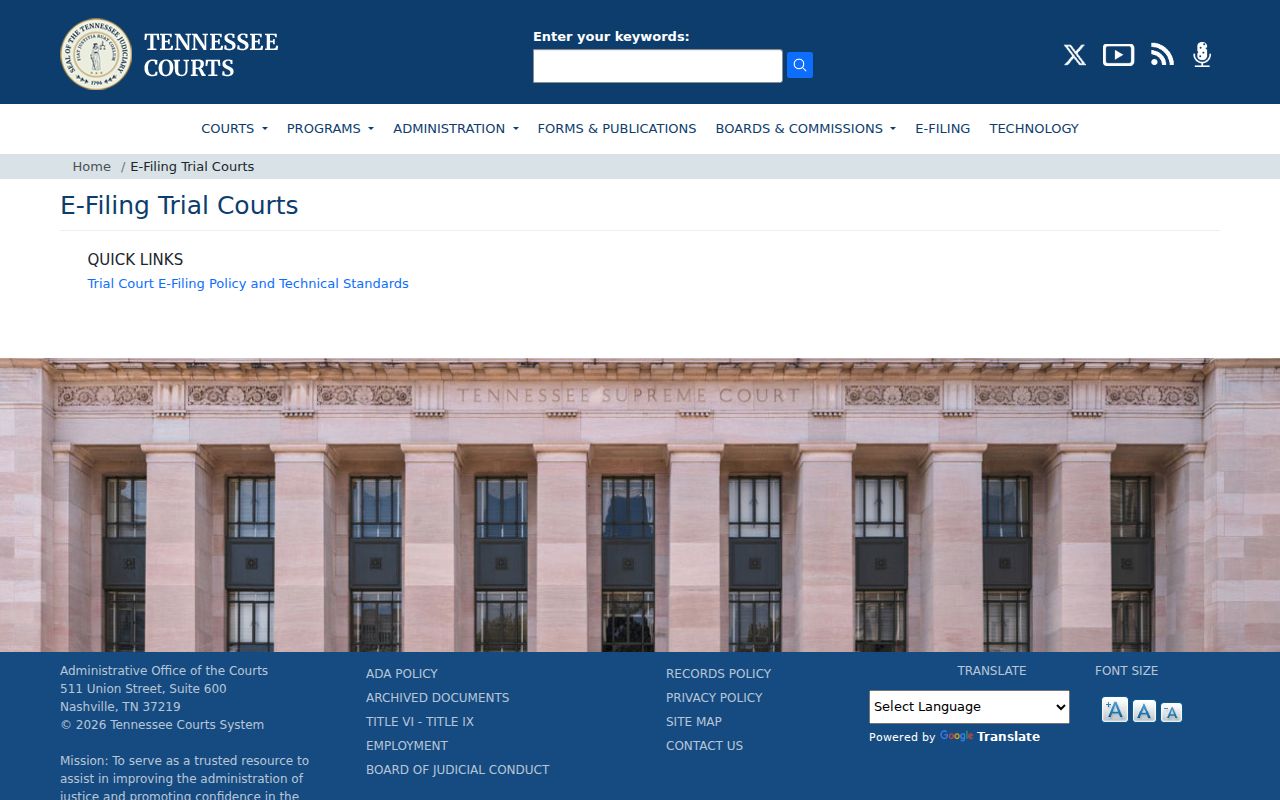
A Moore County e-filing account lets attorneys file documents, but that login is not a Moore County court docket search tool for the public. Ask the clerk whether any registered-user calendar, public terminal, or public link for court dates has been added since.
When a Court Date Moves
Court dates shift in three distinct ways. A continuance pushes a setting back, a reset hands it a new date, and a cancellation wipes it off the calendar, though a fresh order may follow. Paperwork can lag behind. An older notice may still sit in your file after the court has entered something newer, so the most recent filed event is the one that counts. Transfers and appeals can pull a case off one calendar entirely.
Before relying on any listing, call the clerk. Confirm the new date, time, room, judge, and setting type, and ask whether the change appears in a written order or docket entry. Appearance terms can change too, so raise that question as well. In Chancery, find out whether the case is contested and controlled by the Chancellor's calendar, or uncontested and set through the Clerk & Master. The Moore County docket search process can help you pull up the case first.
Note: A continuance request alone changes nothing. The setting stands until the court grants the request and the new date is confirmed.
Metro Meetings Are Not Court Dates
Moore County runs on a metropolitan government, and that creates one predictable confusion. The MTAS Lynchburg profile lists a Metro Council meeting on the third Monday at 6:30 p.m. It meets at the courthouse. That is a legislative session, not a hearing. Moore Chancery's local rule also leans on a third-Monday reference. Its regular sessions run only in March and September. They remain subject to change. A council meeting calendar proves nothing about a case setting. Trust a court notice, an order, a docket entry, or word from the clerk. County administrative hours are not proof of court-counter hours or a judge's calendar either.
Missed Settings and What Comes Next
Missed a Moore County setting? Act fast. Call the clerk for the named court and ask three things: what the docket shows, whether an order was entered, and whether a new date is already set. A clerk can read you the record but cannot tell you what motion to file. If you have a lawyer, contact counsel at once. Going it alone? You may need advice from a Tennessee-licensed attorney.
Missed a setting? A missed date can lead to an adverse order, warrant, bond action, dismissal, or other result depending on the case.
Call the proper clerk now and ask for the latest docket entry, current status, and any new setting.
Do not appear at a new time based on guesswork; confirm where and when the court expects attendance.
The Tennessee Courts support portal appears in the source capture below.
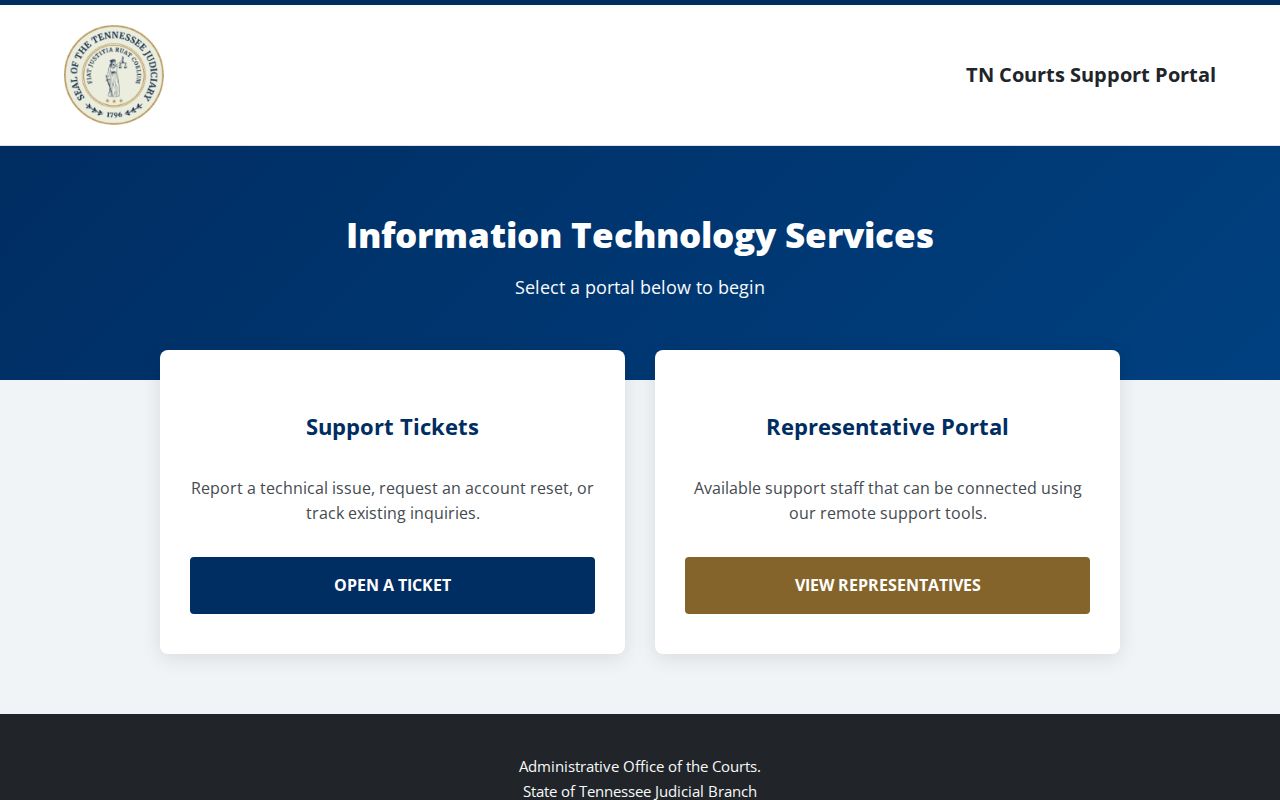
State support lines handle general questions. They cannot replace the clerk's current record of your Moore County setting.
Confirm Moore Court Details Before Travel
The working courthouse sits at 196 Main Street, Lynchburg, Tennessee 37352. Call ahead before making a special trip. The court publishes no floor plan, courtroom list, parking instructions, security procedure, or photography rule. Ask about all of it. Check whether a public calendar is posted. Also ask whether a lobby terminal can display the docket. Do not assume either exists. The official Moore Circuit Court Clerk endpoint offers no case search or calendar.
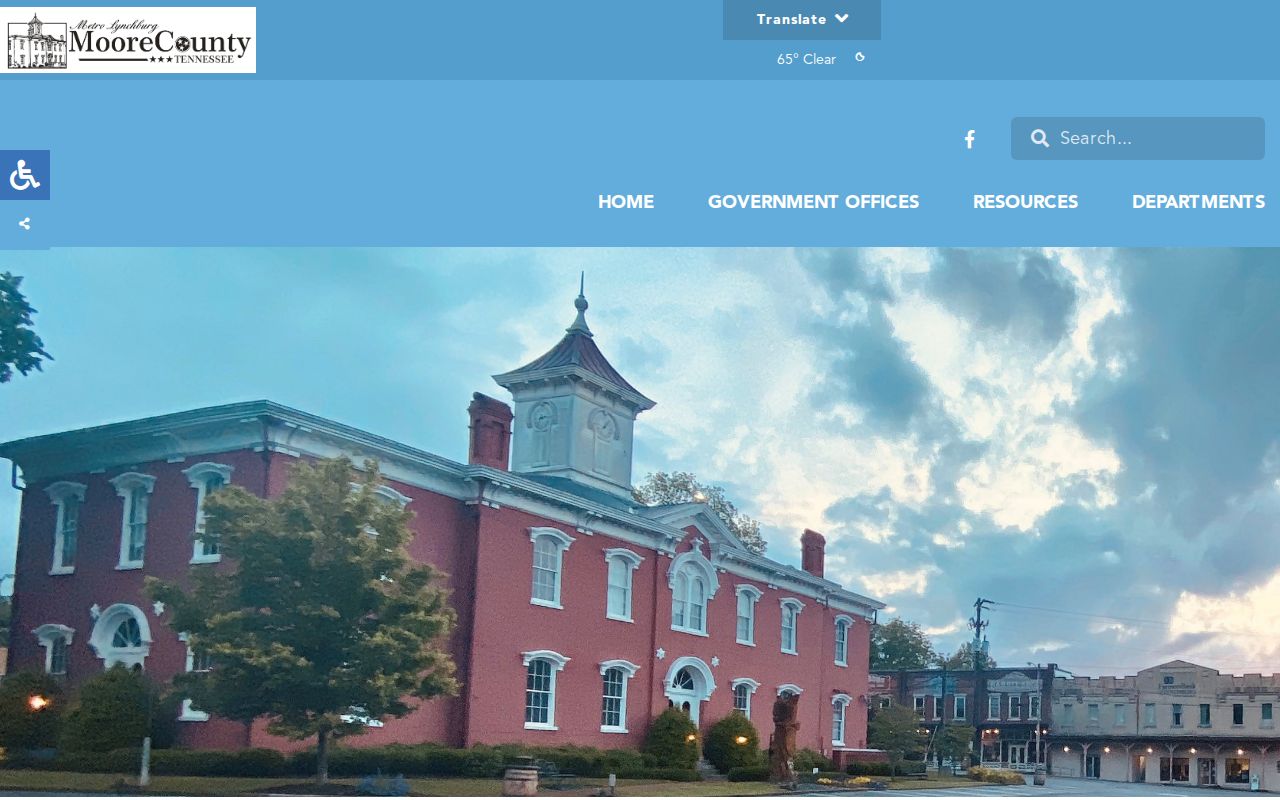
With such a thin web presence, the phone line and clerk counter are the practical route to a current setting. History lives elsewhere. The Moore County Archives directory catalogs the older court holdings.
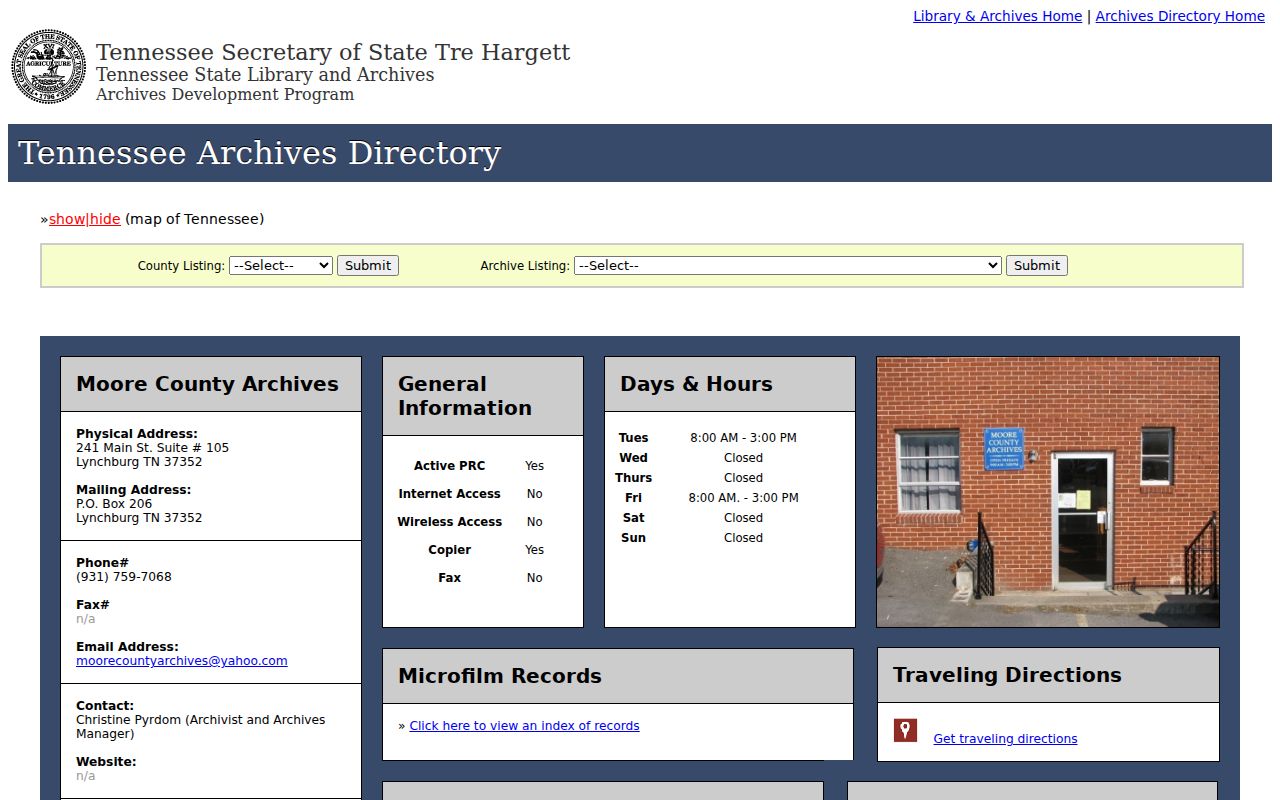
Archives serve older dockets well. For a current hearing date, the clerk remains the source.