
Moore County Court Record Requests
Moore County publishes no official public trial docket or document portal. So begin with the keeper of the file. Circuit Court Clerk Linda Wolaver holds Moore Circuit records. She is the first contact for Circuit criminal matters, Sessions appeals, and uncertain General Sessions routing. Her published number is 931-759-7208. Her mailing address is PO Box 8185, Lynchburg, TN 37352. Clerk & Master Tammy Roberts keeps Chancery, domestic-relations, probate, and equity files. Her office sits at 196 Main Street, Suite 312. Her phone is 931-759-7028, and her email is Tammy.Roberts@tncourts.gov.
Ask for a specific record, not a broad question. Give the clerk the court division and the case number. Include the caption or party roles, the approximate filing year, the date range, the event, and the document type. Then say what you want: inspection, a plain scan, a certified copy, or an official recording.
- Identify Moore Circuit, Chancery, or Metropolitan General Sessions as closely as possible.
- Call the proper clerk and confirm custody, hours, request method, and likely charge.
- Inspect active records at 196 Main Street or follow the clerk's current mail instructions.
- For historic material, contact Moore County Archives before visiting its separate address.
- If access is limited, ask whether public metadata, a redacted copy, or a written denial is available.
The clerk posts no public terminal, fax, drop box, online copy-order form, or Moore court payment process. Ask before you mail originals or payment.
Moore Court Records Need the Right Keeper
Tennessee does not park every court file with a generic county clerk. The official Moore Circuit Court Clerk page routes Circuit work. The official Clerk & Master page routes Chancery work. The published General Sessions court number, 931-455-5407, reaches a judge or court contact. It is not a separate clerk line. For Sessions routing, the Circuit Clerk remains the careful fallback.
Circuit Court Clerk
Linda Wolaver
PO Box 8185
Lynchburg, TN 37352
931-759-7208
Circuit, criminal Circuit, Sessions appeals, and uncertain Sessions clerk routing.
Clerk & Master
Tammy Roberts
196 Main Street, Suite 312
PO Box 206
Lynchburg, TN 37352
931-759-7028
Chancery, domestic, probate, estate, and equity-related records.
Moore County Clerk Lacy Ivey handles vehicle titles, registrations, licensing, marriage, and business services. Her office's polished vehicle portal is not a court-record search. When you arrive at the shared government complex, name the court clerk you need.
Kinds of Moore Court Records
Think of the docket as the index and the chronology. The underlying case file may hold each paper that created an event. A Moore County court case record request can seek one or both, but the clerk should not have to guess which product you want. Some items may be unavailable, restricted, held by another office, or subject to a separate copy process.
- Docket sheet, case history, or register of dated entries.
- Complaint, petition, citation, summons, and return of service.
- Answer, motion, brief, exhibit, and case-management filing.
- Notice of setting, order, judgment, dismissal, and appeal paper.
- Transcript, official recording, financial record, or certification when available.
A docket entry reading "order entered" is not the order itself. It may give the filing date but omit the text and the document image. When you need both chronology and official proof, request "the docket entry and a certified copy of the final judgment."
Moore Docket Entries and Filed Orders
Mixing up an entry with its document is common. It is the most common way a request comes back incomplete. The docket shows what happened and when. The filed order states what the judge ruled. A judgment resolves claims or imposes a criminal result. A transcript or recording captures proceedings through a different process. A clerk certification, in turn, verifies a copy as an official public record.
| Product | What it supplies | What to ask for |
|---|---|---|
| Docket sheet | Chronological event list | Case history through a stated date |
| Filed document | Text of a pleading, motion, or order | Document name and filing date |
| Certified copy | Copy certified by the authorized custodian | Certified judgment or named order |
| Recording | Official electronic record when made and available | Proceeding date and Rule 26 process |
Electronic filing does not erase that distinction. TnCourts trial e-filing is a filing and service mechanism, and local adoption governs it. Moore Circuit and Chancery are listed as "have Applied," not as public online repositories.
Court Records: What They Contain
What a court record contains varies by court and case type. Moore publishes no public sample, so the exact local fields and display codes cannot be promised. Treat the inventory here as a frame for framing a request, not as a promise of a county portal.
| Identity | Case number, court, division, caption, parties, judge, and counsel. |
|---|---|
| Initiating record | Complaint, petition, citation, warrant, or other starting instrument. |
| Event history | Filing dates, service, motions, hearings, resets, and docket calls. |
| Court action | Orders, judgment, sentence, dismissal, and post-judgment rulings. |
| Supporting items | Public exhibits, transcripts, recordings, financial entries, or appeal papers when held and open. |
A public Moore County docket may show basic metadata while an image stays withheld. Financial, medical, juvenile, victim, domestic, or identifying material can carry distinct restrictions. The correct clerk can tell you whether the item exists, where it is kept, and what access rule applies.
Historic Moore Court Record Series
Active case files start at the courthouse, 196 Main Street. Historic court research may take a different start. It can begin at the Moore County Archives, 241 Main Street, Suite 105, Lynchburg, TN 37352. The published phone is 931-759-7068 and email is moorecountyarchives@yahoo.com. The State Library and Archives directory lists Tuesday and Friday hours from 8:00 a.m. to 3:00 p.m. Wednesday and Thursday are closed. No Monday hours are shown. Call first.
| Historic series | Published range |
|---|---|
| Chancery minutes, dockets, wills, probate deeds, loose records | 1872 to 1958 |
| County Court minutes and selected settlement or bond records | 1872 to 1949 |
| Circuit minutes, dockets, and miscellaneous records | 1872 to 1944 |
| Trusts | 1872 to 1930 |
These are listed holdings, not a claim that each file is complete or that nothing earlier exists. The directory says records not at Archives remain at the courthouse. Archives has a copier but no listed internet or wireless access, so bring the names, years, and series details your search needs.
Copy Fees and Certification
Moore posts no official fee schedule for plain pages, certified copies, exemplified copies, docket sheets, name searches, or online documents. The honest fee entry is simple: ask the clerk. Request an estimate and confirm the accepted payment method before asking for a large file or mailing funds.
| Item | Published amount or status |
|---|---|
| Moore plain court copy | Fee not located; ask the custodian |
| Moore certified or exemplified copy | Fee not located; ask the clerk |
| General TPRA black-and-white example | 15 cents per standard letter or legal page |
| General TPRA color example | 50 cents per standard page |
| Rule 26 recording duplicate | $50 per disc with the original; $100 if requested later; indigent exception |
Those TPRA amounts are statewide examples of public-record charges. They are not a fixed Moore court certification tariff. Labor, media, or delivery costs can be added on top. Under Tennessee Rule of Evidence 902(4), a properly certified public record is self-authenticating. So when an agency or a proceeding needs an official copy rather than a screen print, ask the clerk for certification.
Moore Traffic Outcomes Are Separate Records
Some Moore County court events get reported to a state agency afterward. That later state record does not replace the Moore County court case record itself. The Tennessee Department of Safety and Homeland Security offers guidance on traffic school, on failures to appear or pay, and on how commercial citations are reported. What follows on each page is an official state explanation, not a Moore docket search. The state traffic-school guidance describes court-ordered driver-improvement courses and how they work.
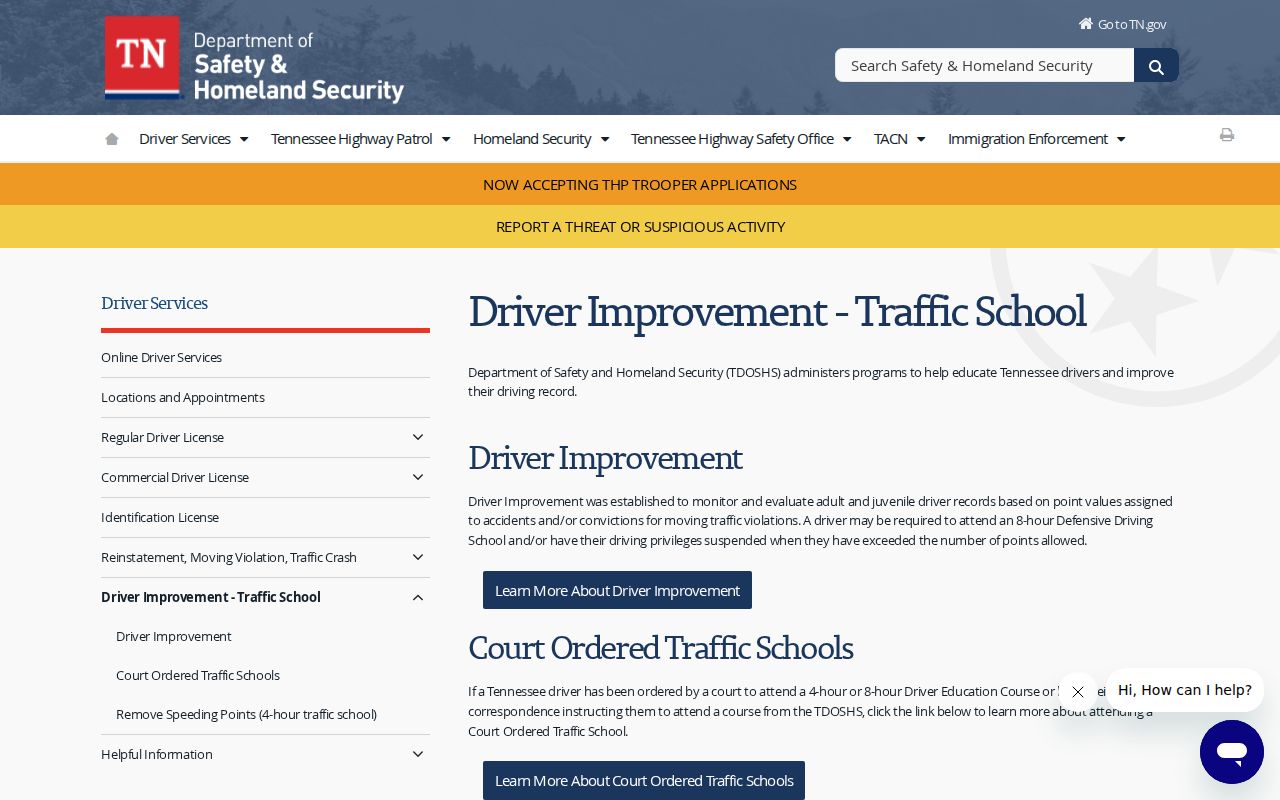
That official page makes clear why course information belongs apart from the clerk's citation docket and disposition. The court-reported failure guidance covers state consequences and the court release information a driver may still need.
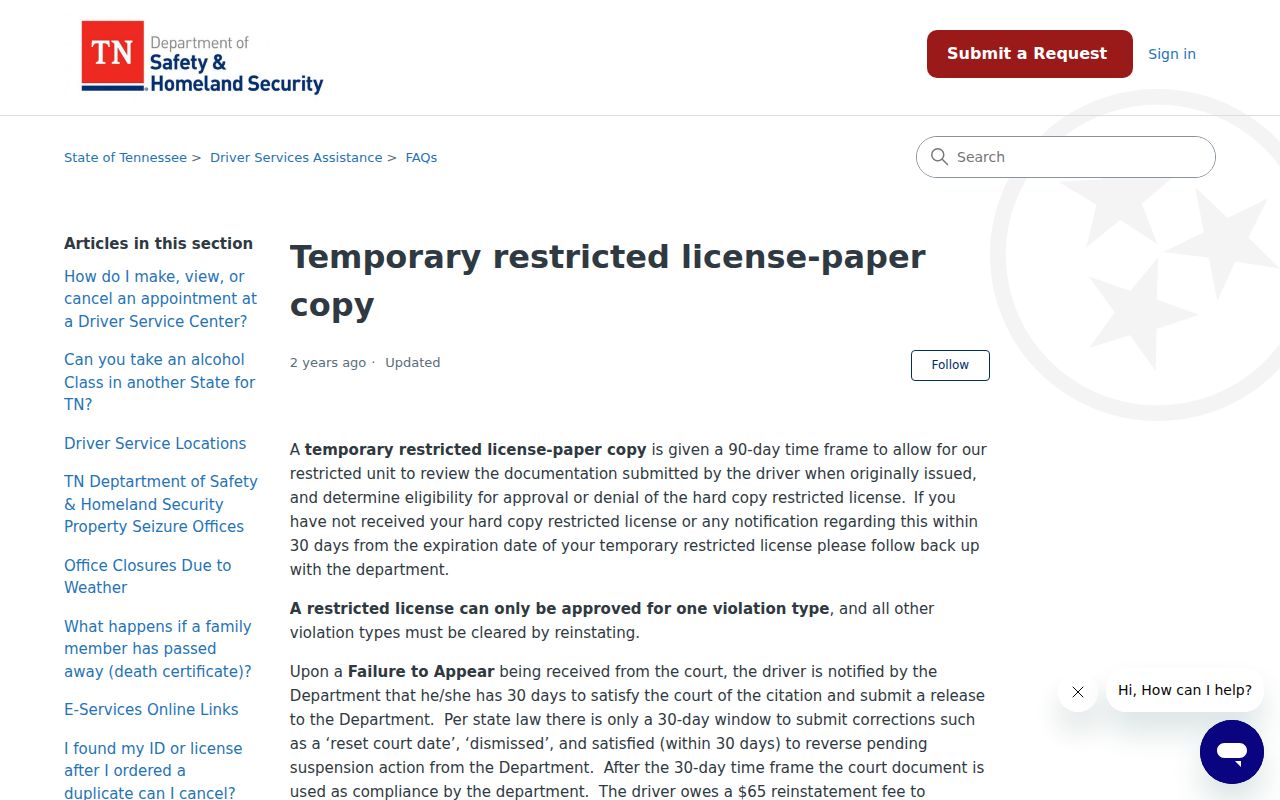
The state directs readers back to the court for the event and any release behind the licensing step. The official CDL citation page explains how court dispositions on commercial citations are reported.
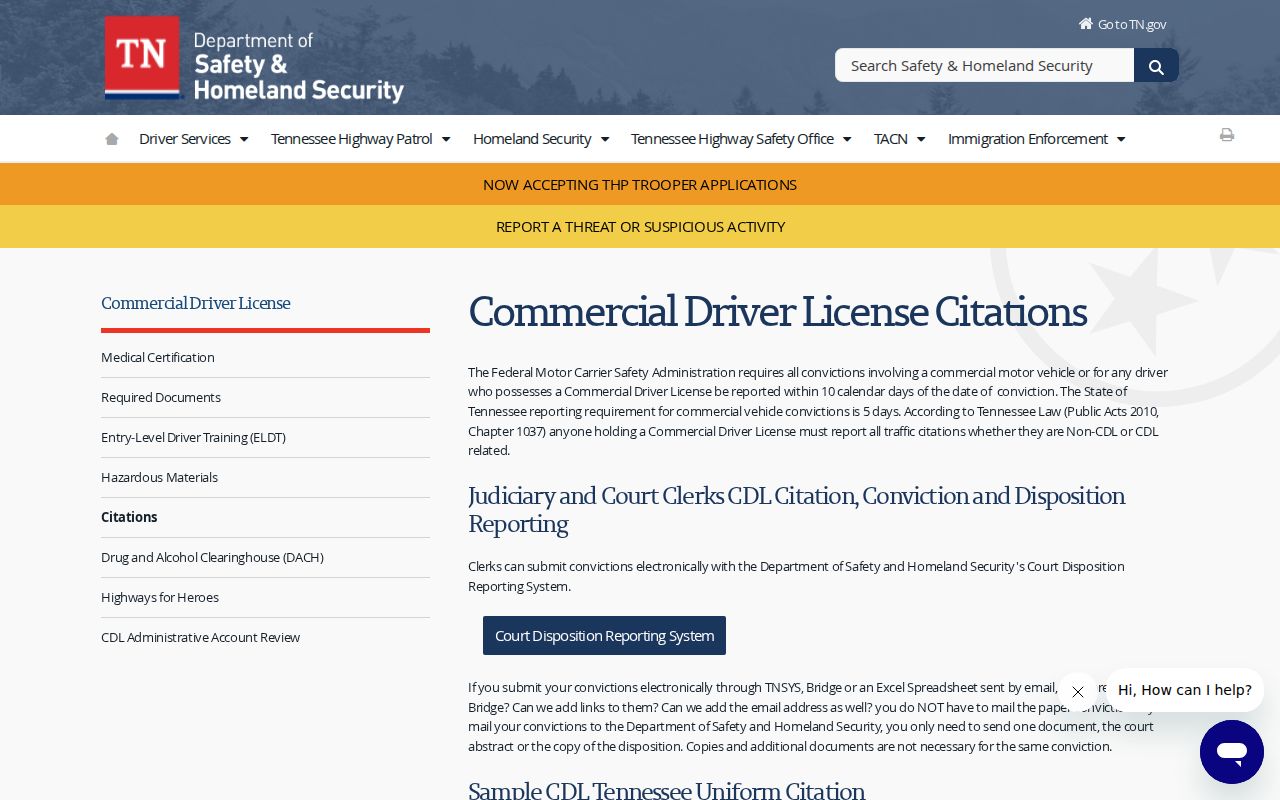
A state reporting record sits downstream of the court. For the Moore citation, docket, judgment, and certified disposition, the court clerk remains the source.
Moore Public Records Request Mechanics
Moore County lists its Public Records Request Coordinator route as “N/A; Department Head of Moore County Archives.” The listed phone is 931-759-7068, with the Archives email. That office can help route a broad county records request. It does not mean Archives holds every active Circuit or Chancery case. So start an active-file request with the court clerk, and use the PRRC route as appropriate.
The Comptroller's TPRA FAQ says a request must identify existing records with reasonable specificity. An office does not have to create a record. It need not answer a question or compile new data. Inspection requests may be oral or written depending on office practice. Copy requests may need to be in writing. A response is due promptly. Or, within seven business days, the office should provide access, deny the request, or state how much time it needs.
Looking at records usually costs nothing. Copies and delivery can. Tennessee citizenship and identification rules may apply. Hold off on sending private data by email. Wait until the custodian offers a secure, approved method.
Access Rules for Court Records
Tennessee Supreme Court Rule 34 gives the public the right to inspect court records unless an express exemption applies. It separates case, administrative, and judicial records. Sealed, confidential, protected, draft, and internal material can fall outside public access, and every trial court must maintain access policies.
Access distinction: “Not online” may mean Moore has no public portal, the image is restricted, the record must be inspected at the counter, or the case is sealed. Those are different findings.
Rule 1A sets a civil sealing standard. It weighs a serious and substantial interest against the public interest and less restrictive means. The TPRA cannot override a court rule, statute, protective order, or seal. Juvenile, adoption, domestic, mental-health, medical, victim, and identifying information may carry added limits.
If you are denied access, ask whether the public docket metadata stays open. Ask whether a redacted copy can be supplied, whether a court order is required, and whether the custodian will give a written explanation. A missing appellate document may simply reflect migration or date limits in Tennessee Public Case History. It may be missing rather than sealed. The appellate portal serves appealed cases only. It cannot replace a Moore County trial-file request.